

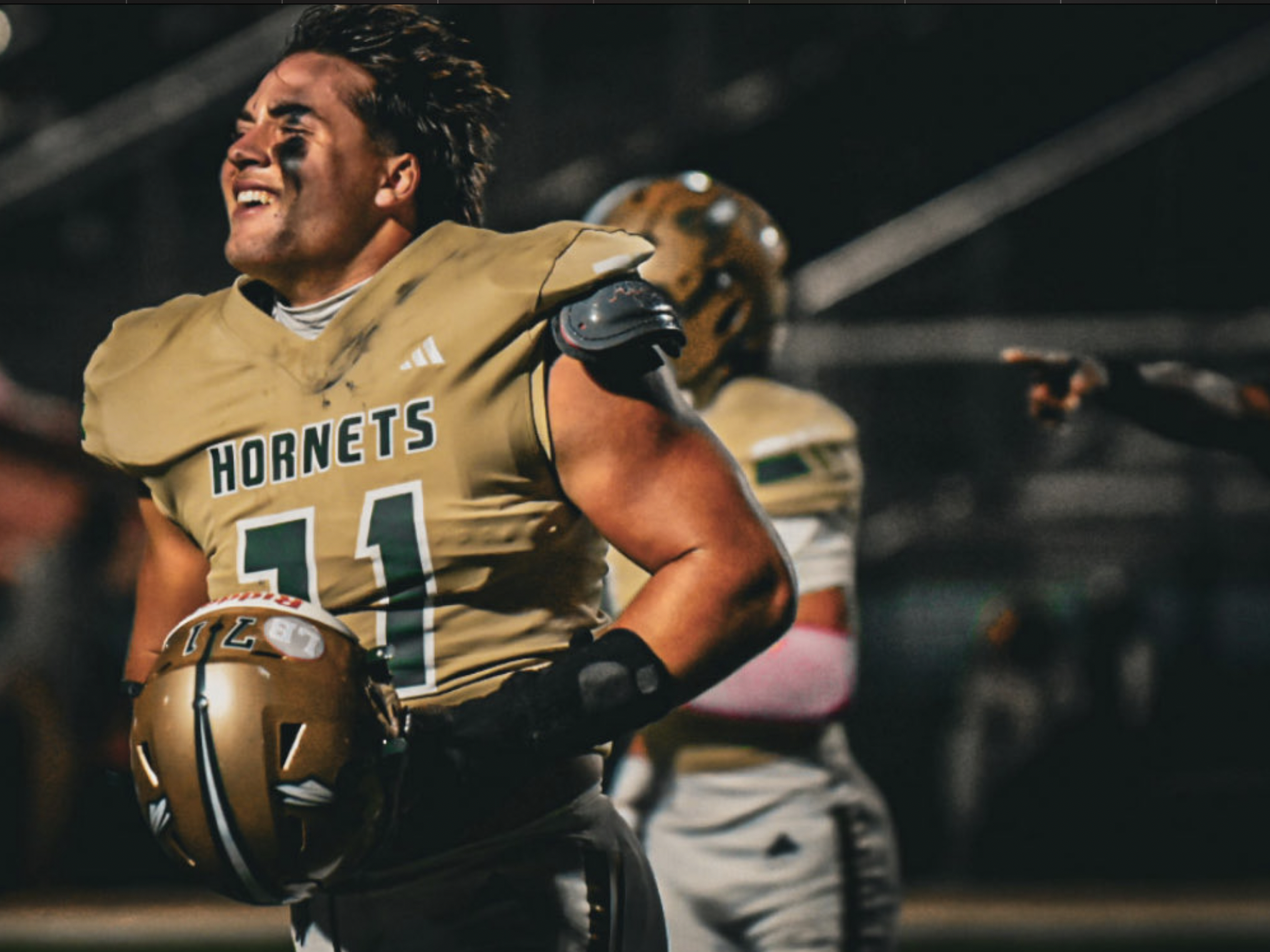
When you turn on Sam LeJeune’s film, the first thing that jumps out isn’t theatrics, it’s disruption. Backfield penetration. Consistent pressure. A defensive lineman who seems more interested in doing his job than talking about it. That same mindset came through clearly during a recent sit-down interview, where LeJeune spoke candidly about his goals, his upbringing, and why he’d rather trade rankings for certainty.
Setting the Standard
LeJeune doesn’t hide from expectations. He embraces them, with numbers.
“I’d like to get 10 or more sacks, close to 30 tackles for loss, and around five forced turnovers,” he said. “I also blocked five field goals this year, and I want to double that.”
For a player already viewed nationally as one of the top defensive linemen in the country, the benchmarks are aggressive, but not surprising.
Work When Nobody’s Watching
While many athletes treat the offseason like downtime, LeJeune treats it like separation season.
“I’ve been on the field two or three times a week, even though the season’s still far away,” he explained. “Working pass-rush moves, hitting bags, getting my spin move and cross-chop right. I’m trying to get my hands better too.”
That kind of consistency, long before kickoff is in sight, tells you everything about how he approaches development.
Results Over Recognition
Despite how physical his film looks, LeJeune doesn’t see himself as a “mean” player.
“I’m really just chill,” he said. “I’m just trying to make the play however I have to hard tackle or not. I just want to get the job done.”
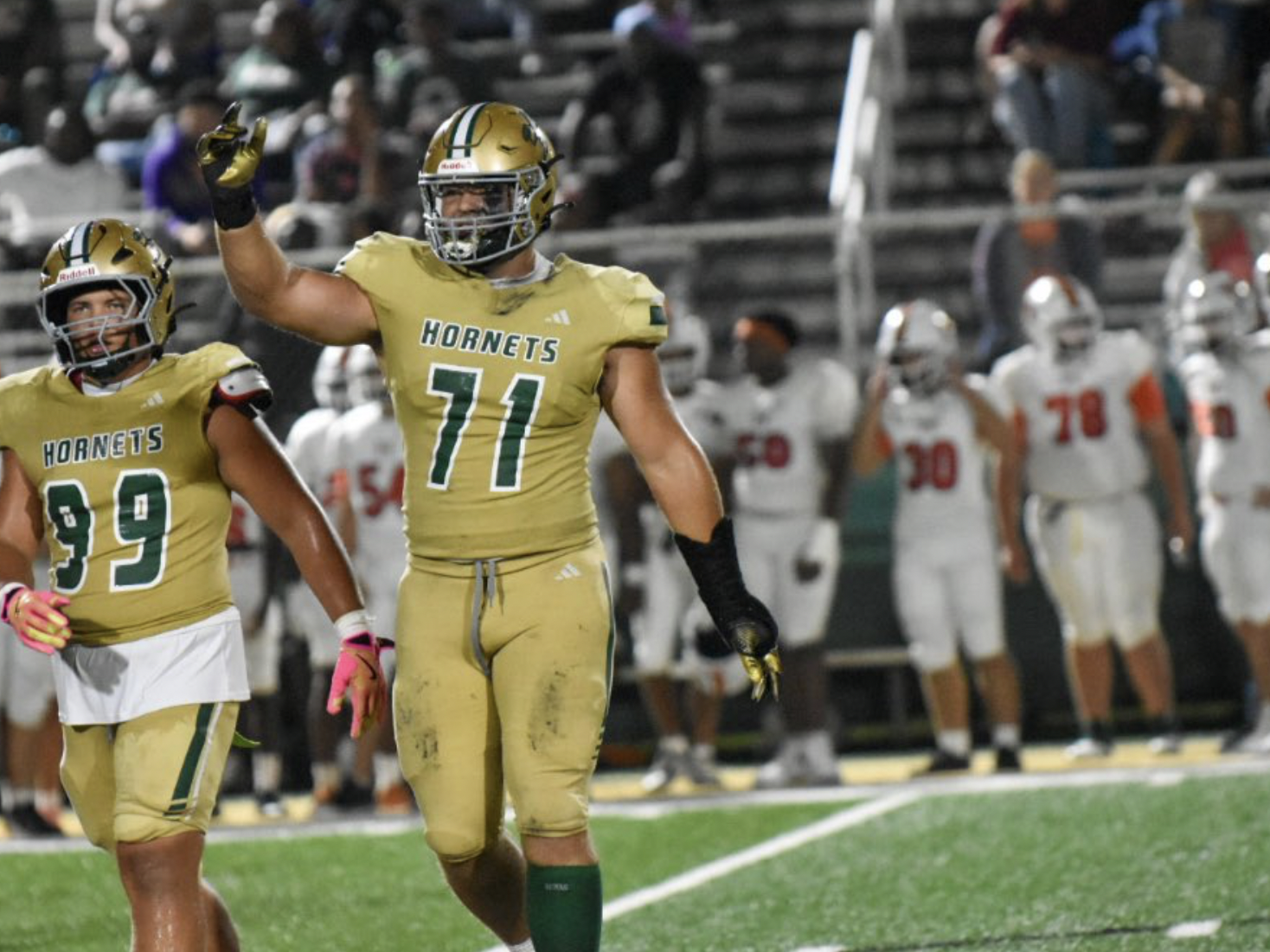
When pressed on his greatest strength, he pointed to run defense and backfield disruption.
“I feel like I was in the backfield a lot this year, even if it didn’t always show up as a play. Just being disruptive.”
Accountability After Adversity
Bad reps and bad games don’t linger long with LeJeune.
“I attack practice,” he said. “Watch more film. Prepare harder the next week and go for it.”
That accountability extends to self-evaluation. He didn’t dodge areas for improvement, calling tackling the weakest part of his game at times, often because he’s arriving too quickly and not finishing cleanly.
A Journey Shaped by Structure
LeJeune’s path to Poplarville wasn’t linear. He moved frequently, living in Louisiana, Florida, Bay St. Louis, Mississippi before ending up in PopVegas.
“I’ll be honest, I was skipping school to surf and fish,” he admitted. “I was bad at football, out of shape. My mom gave me structure. I hated it then, but I’m grateful now. I’d probably be on the beach being a bum if she didn’t.”
That structure changed everything.
Influences That Matter
The first person who made him believe football could take him further than Poplarville was Jacob Bradford, a Louisiana Tech defensive lineman.
“He was like a big brother I never had,” LeJeune said. “Took me under his wing. Trained me. Always kept it real.”
He also credited his high school coaches, especially his defensive line coach, for honesty and accountability.
Next Level Loading….
LeJeune’s recruitment has no shortage of interest. Florida State, Notre Dame, and Tennessee are among the programs recruiting him hardest, with visits already under his belt. Still, he keeps perspective.
“I honestly wish I wasn’t ranked,” he said. “I don’t like hype. I just want my offers and to know where I’m going. When you’re ranked, people expect you to make every play, even when you’re getting doubled or tripled.”
That mindset says more than any star count.
The Player Behind the Pads
Asked what doesn’t show up on Hudl, LeJeune smiled.
“I love to fish. And I love to work out. I’m a gym rat honestly, I like working out more than football. It just happens to help football.”
Four meals a day, protein shakes, and a steady routine. Simple. Consistent. Effective.
Case Closed
Sam LeJeune isn’t chasing headlines. He’s chasing mastery of his craft, his body, and his future. In a recruiting world built on noise, his approach is refreshingly quiet.
There’s only one high school season left between Sam LeJeune and Saturdays in the Power Four trenches, and when that gap closes, offensive coordinators will learn quickly that disruption travels.
