
In today’s competitive landscape, even the top Division I college programs find themselves in a relentless race to keep pace with their rivals in the ever-evolving world of college athletics. For Ole Miss, a new avenue for revenue generation has emerged that could help them stay competitive within the SEC. Friday, the NCAA Division I leaders approved the use of uniform patches.
This development opens up additional revenue streams that can significantly bolster athletic departments as they navigate the complexities of Name, Image, and Likeness (NIL) agreements and other financial challenges. Starting August 1st, Division I teams will be permitted to display up to two patches—each no larger than four square inches—on their uniforms during regular-season games. These patches will complement existing logos from uniform manufacturers.
However, this change isn’t a free-for-all; the rules committee is still determining how these patches will be managed during postseason events such as the College Football Playoffs, March Madness, and the College World Series. Additionally, schools must ensure they do not promote companies that compete with NCAA sponsors.
As college programs increasingly resemble professional franchises, this initiative presents an opportunity for teams like Ole Miss to enhance their competitiveness within the SEC. In professional sports, NBA teams have earned up to eight-figure sums by selling portions of their uniforms to advertisers. Projections suggest that college programs—particularly in basketball and football—could generate anywhere from $500,000 to $12 million from these patches.
This latest addition further enables schools to build a financial foundation essential for keeping up with the college athletic Joneses, so to speak. Athletic programs can now supplement their revenue streams alongside the $20.5 million allocated for player compensation under new regulations introduced this season. The NCAA also allowing schools to place logos on their football fields is just another opportunity to help schools evolve in these new times of college sports.
Josh Whitman, chair of the Division I rule-making body and Illinois athletic director, emphasized this historic move: “The Cabinet’s vote today reflects the ongoing commitment of Division I members to drive additional revenues and fully fund.”
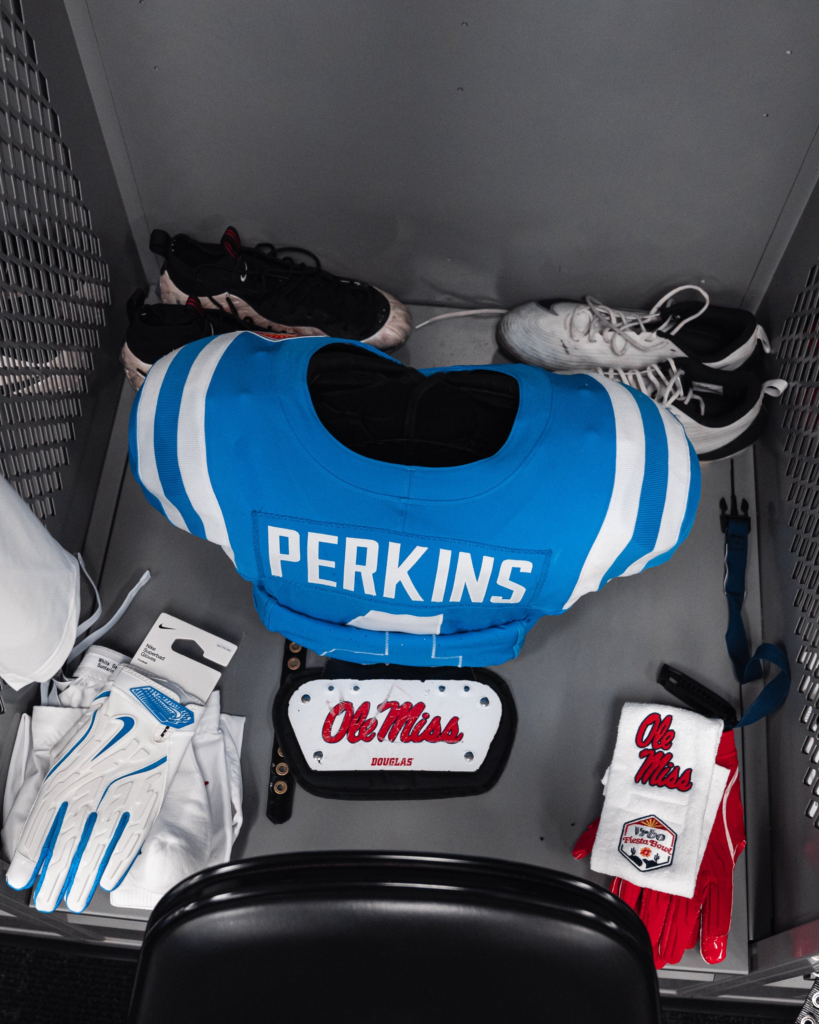
As we look ahead, it remains to be seen which corporate sponsors will adorn those iconic powder blue uniforms worn by Rebel athletes across various sports. For now, Ole Miss has yet another opportunity to vie for prominence in the fiercely competitive arena of college athletics.