

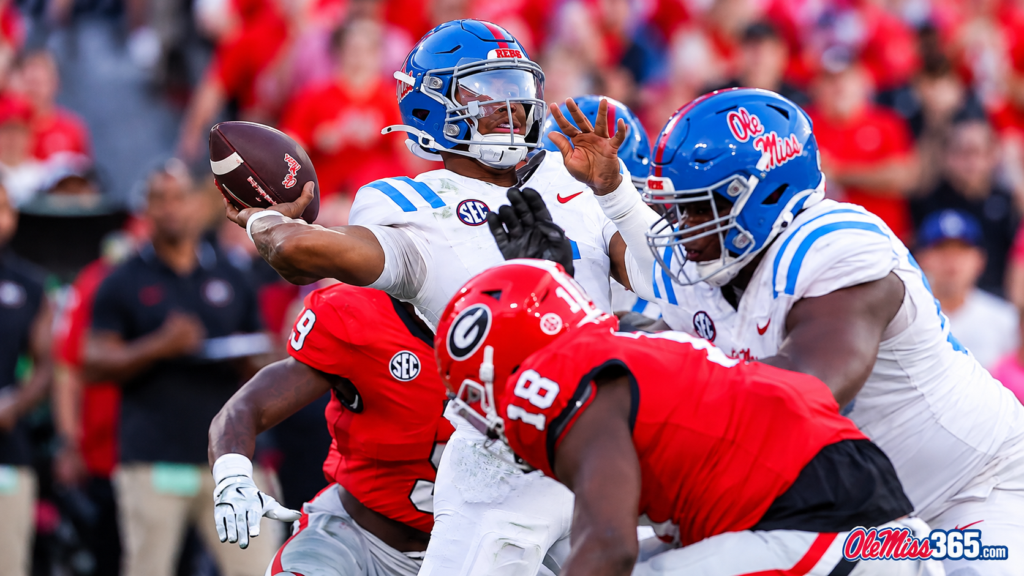
Vanderbilt doesn’t have to bring pressure on every play to make life difficult for Trinidad Chambliss.
The Commodores just need Ole Miss to fall behind the chains.
That’s what makes first and second down so important for the Rebels heading into Saturday’s matchup in Nashville. Vanderbilt is averaging 3.25 sacks per game, and its defense has shown it can make things uncomfortable when opponents are forced into obvious passing situations.
For Ole Miss offensive coordinator John David Baker, the challenge is keeping Vanderbilt from getting those opportunities.
The Rebels are averaging just 117.5 rushing yards per game, while Vanderbilt is allowing 128.2 yards on the ground. Ole Miss doesn’t need to dominate the running game, but it has to find enough production to keep the offense balanced.
And second down could be where this matchup is decided.
A four-yard gain on first down gives Baker options. He can run the football again, get Chambliss involved in the quick passing game or take a shot downfield.
But a tackle for loss or missed block changes everything.
Second-and-12 puts Ole Miss in a much tougher position. Vanderbilt can become more aggressive, knowing the Rebels are more likely to throw the football.
Vanderbilt’s defensive production explains why those situations matter. The Commodores rank 12th nationally and fourth in the SEC in sacks, with Nick Rinaldi leading the way at 3.5. CJ Heard and Issa Outtara have also contributed to a defense capable of disrupting plays in the backfield.
That puts additional responsibility on the Ole Miss offensive line.
The Rebels can’t afford missed assignments, penalties or tackles for loss that allow Vanderbilt to take control of a possession before third down even arrives.
Baker also needs to give Chambliss some easier opportunities.
Quick throws, screens and getting tight ends Luke Hasz and Caleb Odom involved could help slow down Vanderbilt’s pressure. Mixing those plays with the running game would make it harder for the Commodores to anticipate what’s coming.
Kewan Lacy’s possible return could help, too.
Pete Golding expects Lacy to be available after missing the Florida game with a shoulder injury, but his status remains uncertain. If he plays, Golding plans to manage his workload and continue rotating JT Lindsey and Makhi Frazier into the backfield.
Still, this matchup isn’t about which running back gets the most carries.
It’s about keeping Chambliss out of difficult situations.
When Ole Miss stays ahead of the chains, Baker can use play-action, move the pocket and give his quarterback opportunities to attack downfield. Chambliss also has the mobility to extend plays when protection breaks down.
But when the Rebels consistently face third-and-long, Vanderbilt can turn up the pressure and force quicker decisions.
Ole Miss doesn’t need to rush for 200 yards Saturday. It needs to execute well enough on early downs to keep the entire offense available.
Vanderbilt wants to dictate third down. Ole Miss has to take that opportunity away on the first two.
